Establishing trust in C2C commerce on Marketplace
Designing through a trust and safety lens had a material impact on transactions across Facebook Marketplace, and it had a direct role in establishing product-market fit for C2C shipping on the platform.
- I led design work across Facebook Marketplace’s buyer experience, specifically working with product teams focused on establishing C2C shipping as a complementary part of the product.
- I worked with cross-functional partners to advocate for a trust-led roadmap. Research pointed toward trust as a clear barrier to adoption, and the levers were in place to address these gaps.
- I partnered with other designers across the buyer and seller platform teams to bring this work together — and worked with product and engineering to vet each approach through experimentation.
- The parallel workstreams led to incremental lift in transactions while maintaining stability across all core guardrail metrics, effectively demonstrating the value of a trust-based lens while landing product fit.
+7%
+7% — Incremental transactions from the shipping-transparency rollup
C2C Shipped experiment rollup
+3%
+3% — Incremental transactions from reintroducing Purchase Protection
Single experiment — one half
1:1
1:1 — Holdout and guardrail metrics held throughout
Stress-tested at launch
Overview
Facebook Marketplace launched in 2015 as a platform for local, person-to-person commerce. In early 2019 it added a shipping-focused MVP for sellers, one that hinged on the team’s ability to translate those seller capabilities into compelling listings for buyers. The next two years would involve various rounds of experimentation and soul-searching, eventually resulting in a commitment to trust and safety — and the ultimate success of C2C shipping as a core part of Marketplace.
The challenge
The goal was product-market fit for C2C shipping without degrading the local experience Marketplace was built on. Unfortunately, the initial release of C2C shipping was doing just that, and potential buyers were shying away from shipped listings due to a vetted lack of trust: in the platform, sellers, and the product listings themselves.
My role
I joined this work at a horizontal level over multiple product teams working on the buyer experience. Marketplace at the time was an experimentation-heavy product org, and my work spanned experiments at different altitudes from platform-level adjustments to targeted, listing-specific metadata tests. This work was a true collaboration across product, design, and engineering, and it’s that partnership that pushed C2C shipping from a vision to a viable product.
Making the case for trust
I joined the team in the early stages of that aforementioned soul-searching. We understood that buyers weren’t adopting C2C shipping, but the reason why wasn’t immediately clear.
Over time though, that answer became abundantly clear. Through partnerships with UXR, data science, product, and product marketing, we established that trust — both for buyers and sellers — was paramount to landing this as a core part of the Marketplace product. User interviews, lightweight experiments, and broader survey research all pointed toward trust as the biggest risk to PMF.
But that also meant it was the biggest opportunity, and research backed that up.
Our team proposed a new, trust-focused roadmap targeting some of the biggest opportunities in product, and it locked in funding across a range of tracks, including:
- Making shipping legible on product pages
- Reintroducing Purchase Protection
- Adding video to product listings
Making shipping legible
The first step was clarifying expectations and details around C2C shipping. Information already existed throughout the buyer experience — search results, product details, etc. — but the current treatment wasn’t setting clear or consistent expectations. The experience alluded to ideas but withheld key information.
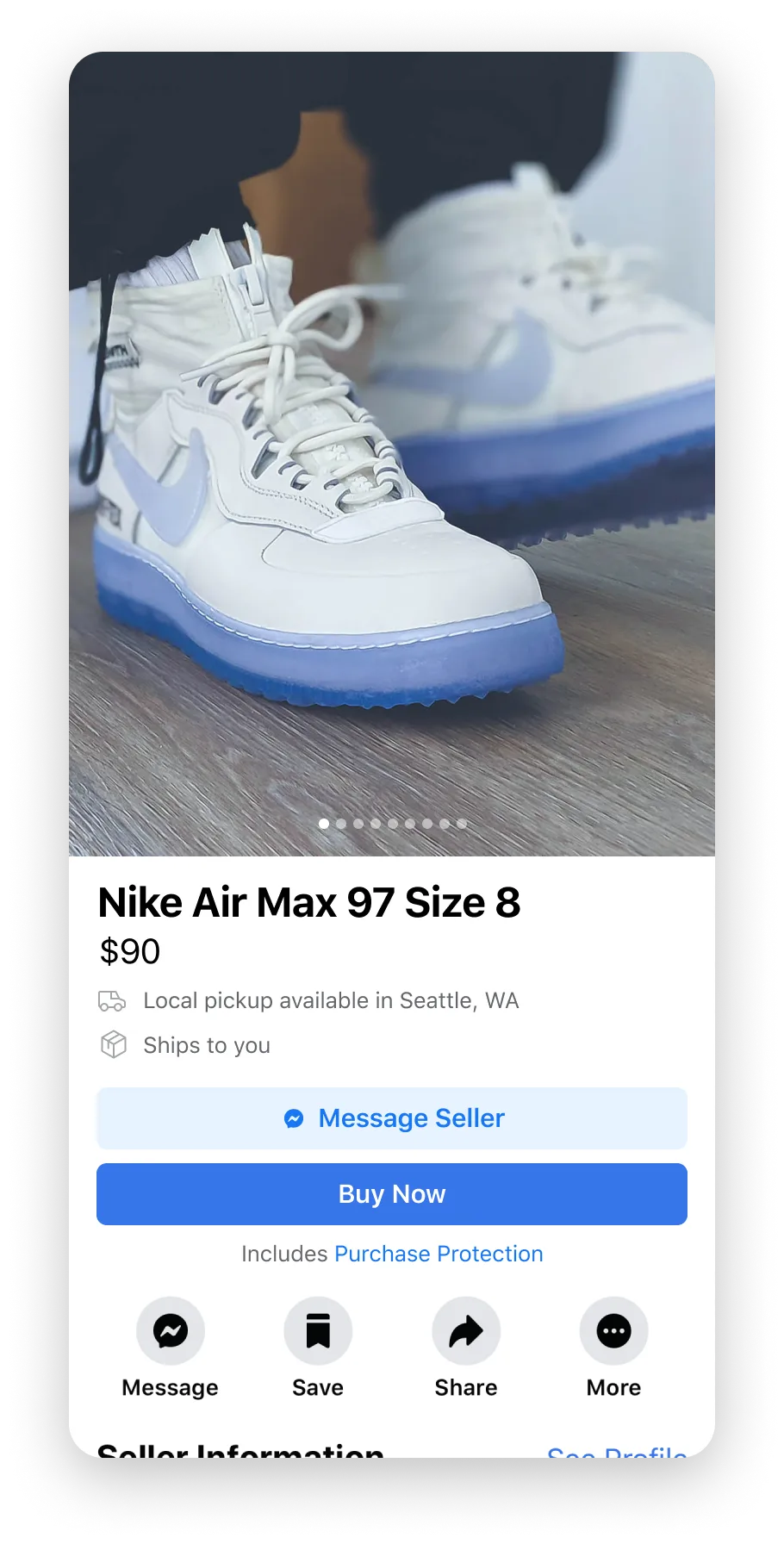
Thankfully the unlock was already in the system on the seller side of the product. Sellers selected discrete shipping details while creating C2C shipping listings, and that information mapped almost 1:1 to the buyer’s view of the PDP. Things like carrier, cost, and package weight all directly informed the shipping experience — and they were the exact pieces of information buyers wanted to have before making a purchase. I worked with the seller experience team to map the information we stored, partnered with engineering to codify it into buyer-facing labels, and reviewed the data with our metrics review board to ensure it could be shared safely.
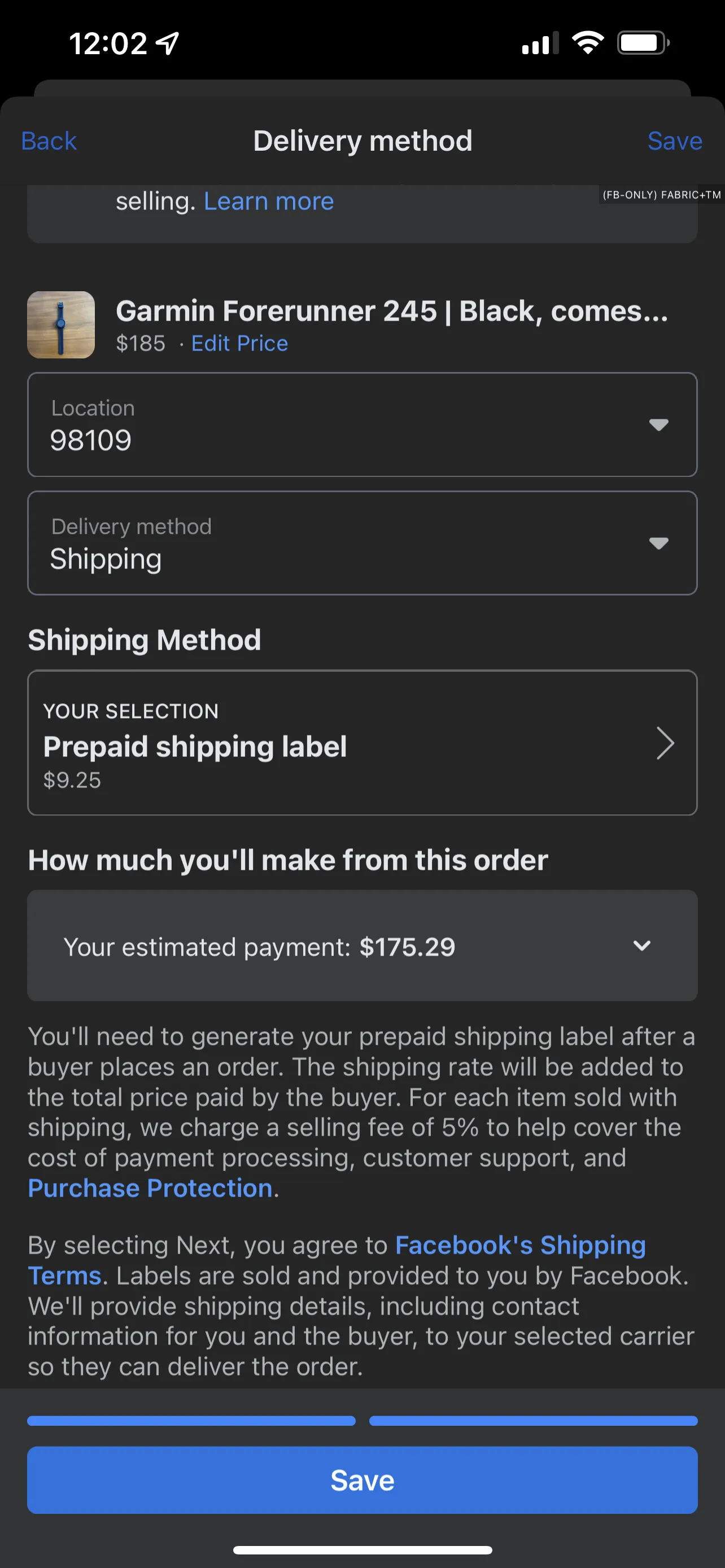
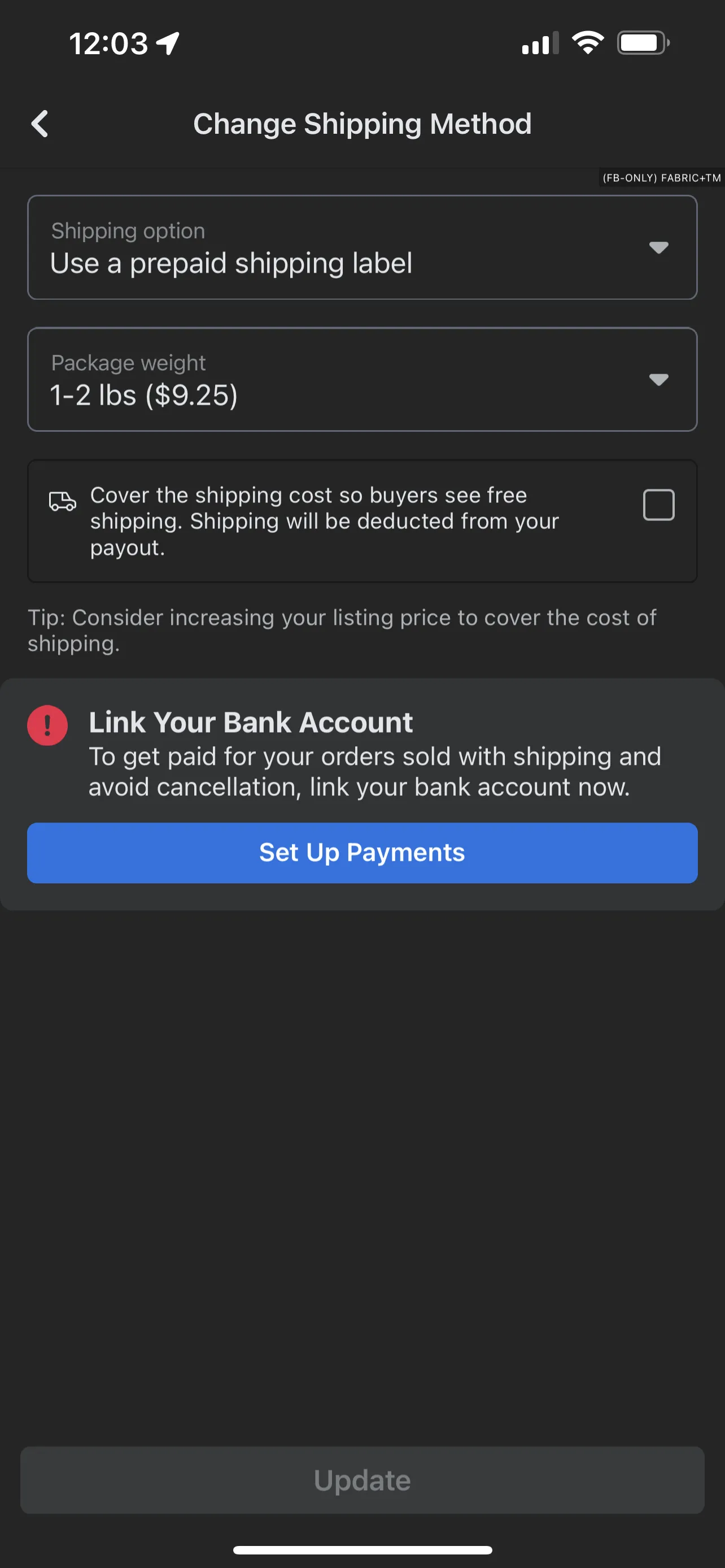
The PDP’s top-level metadata rows became the delivery surface — modular, testable, and shippable without major design changes. Each row was its own experiment, which let us learn whether education alone improved trust, as well as which pieces of information actually moved buyers.

The same investigation surfaced seller metrics that could carry trust on their own — ratings shared directly with buyers, and how many times a seller had shipped through Marketplace.
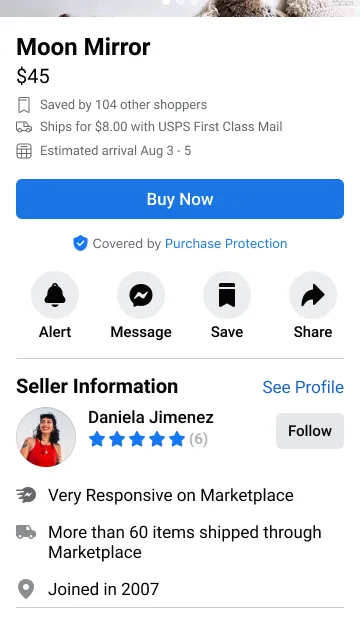
The results — each transparency experiment lifted C2C Shipped transactions 1–3%, and the rollup drove a 7% increase in incremental transactions.
Reintroducing Purchase Protection
Marketplace had a generous refund policy almost nobody knew existed: Purchase Protection. Data science found that buyers who did know about Purchase Protection were 8.3× more likely to make a purchase — the strongest single trust signal we had. I worked with my product manager and my other design partner on the end-to-end product effort to test this hypothesis.
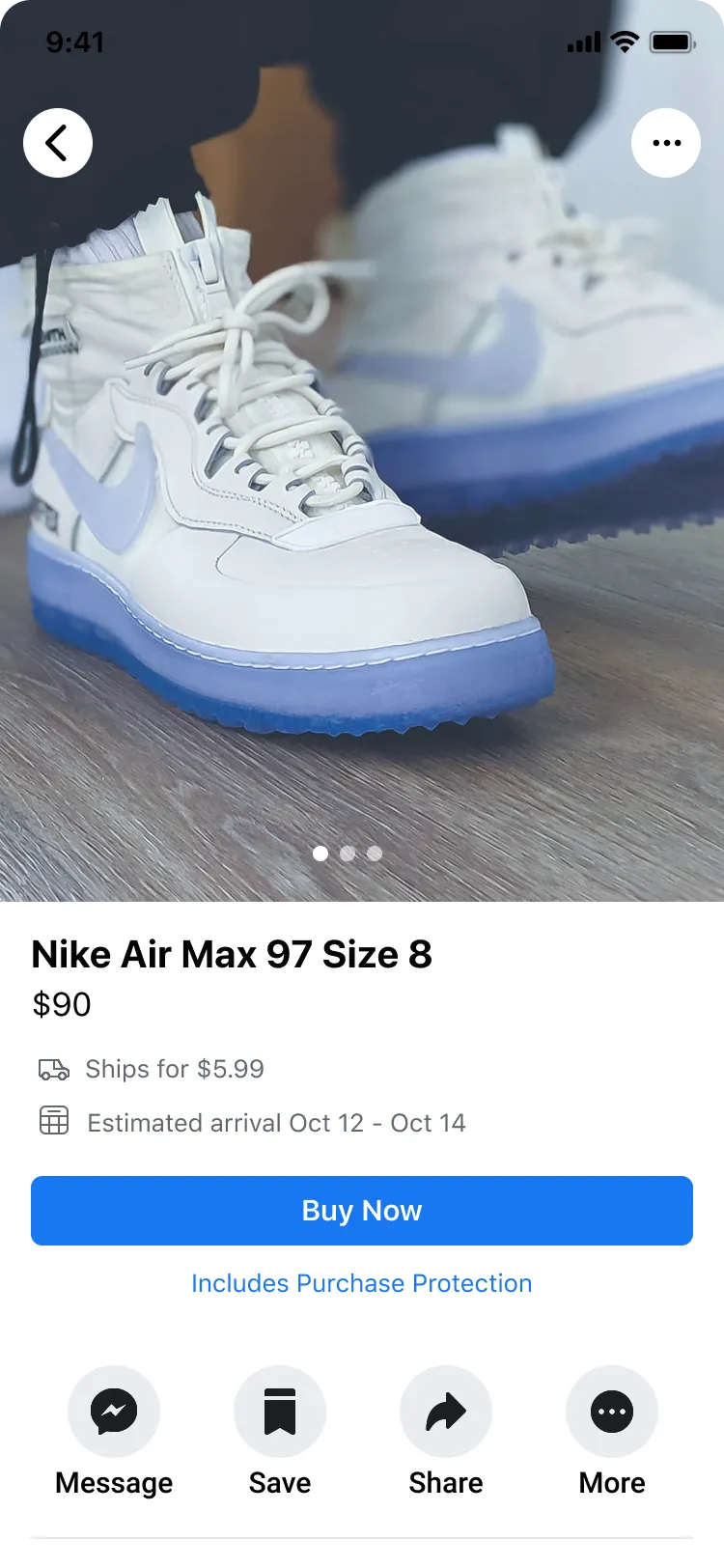
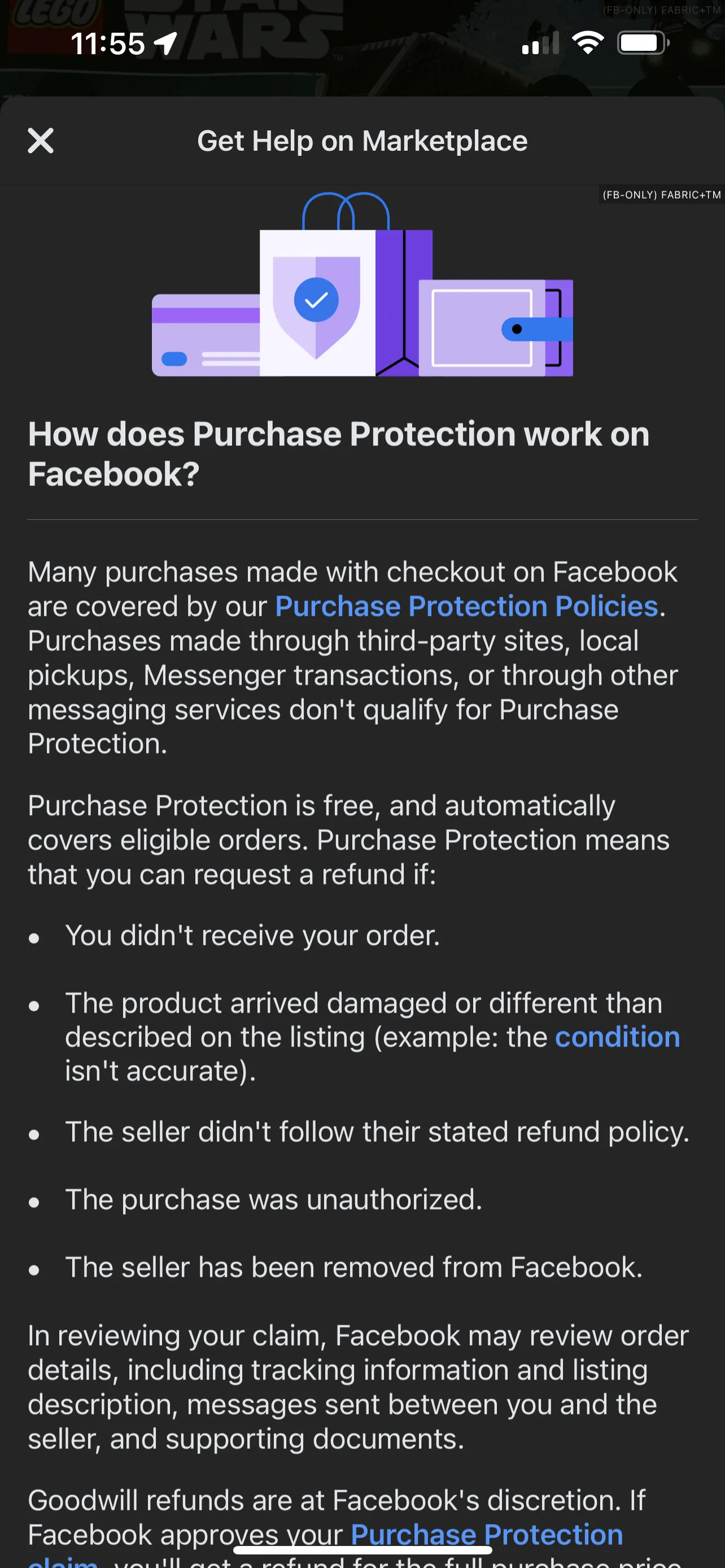
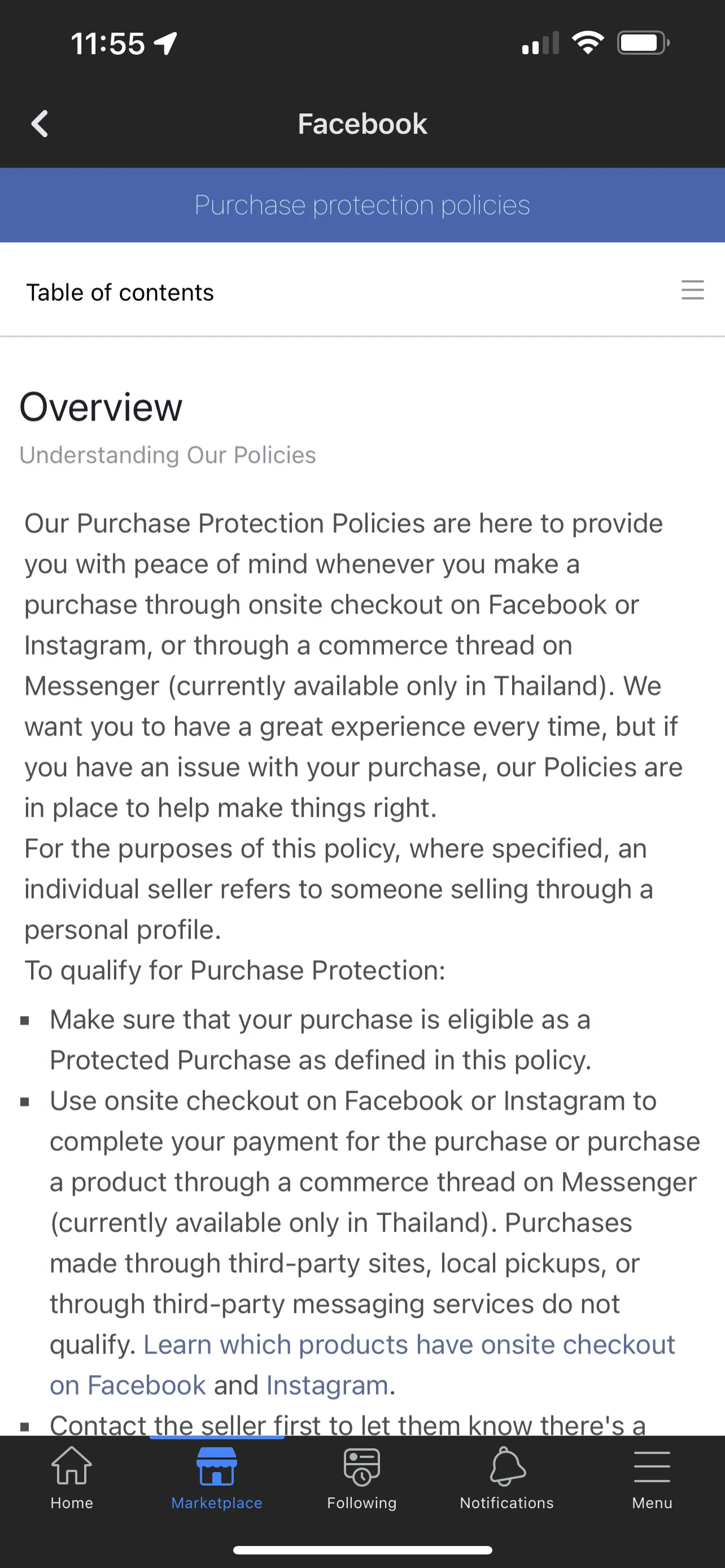
I designed the reintroduction around progressive disclosure — a clear claim at the point of purchase, backed by a plain-language summary of what’s covered — and leveraged existing approved policy content to expedite review for the MVP.
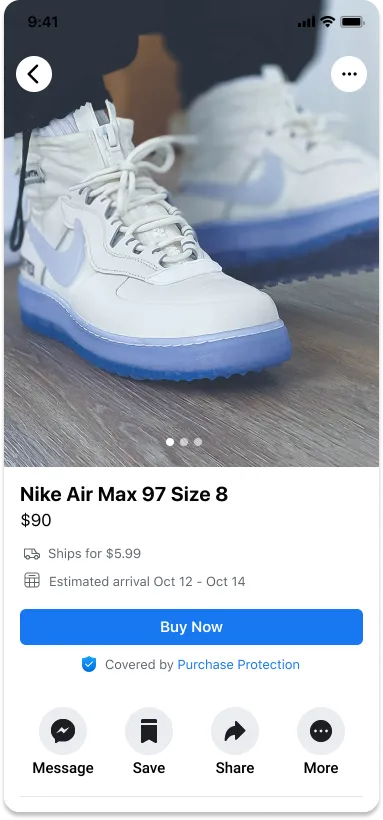
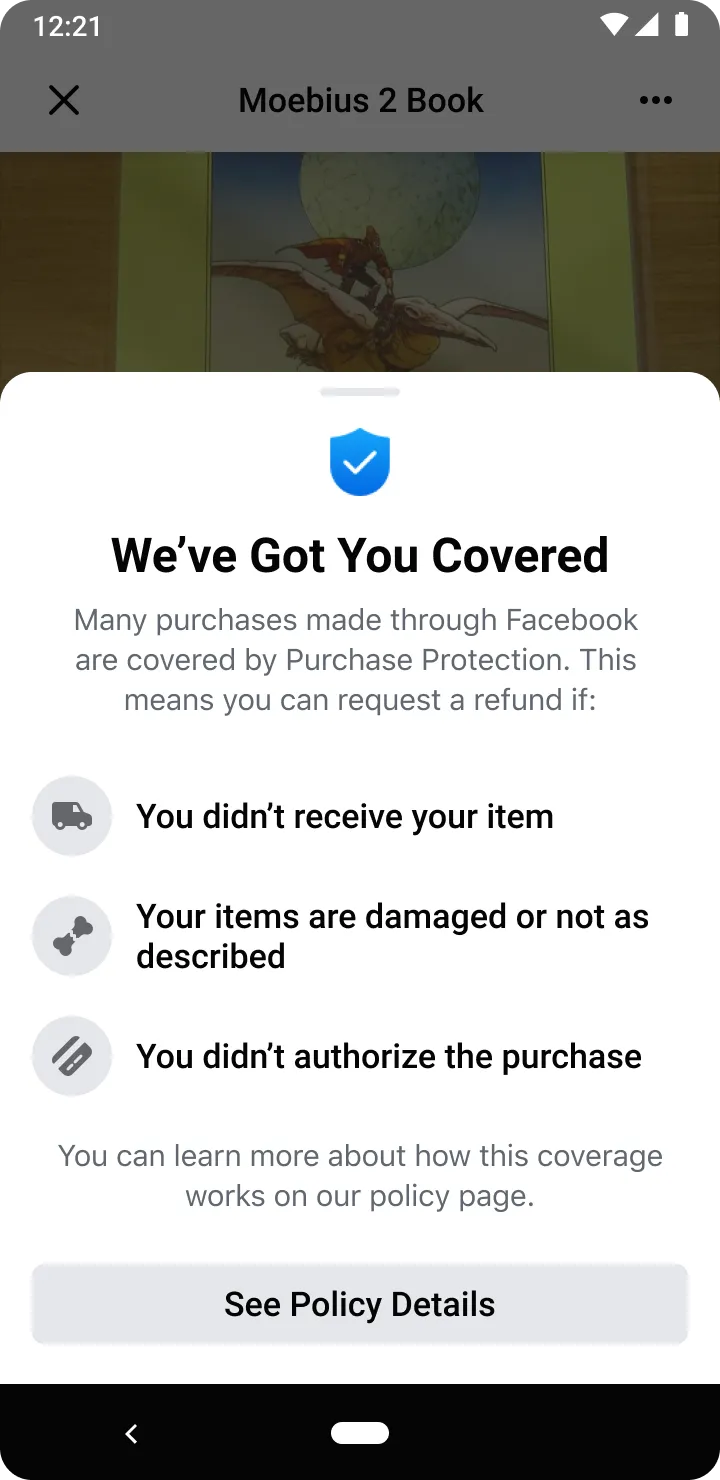
We also tested how the same information landed in different placements across the PDP — under the buy button, in the media viewer, and in the condition sheet. The experiments identified where engineering effort would return the most value, we recommended sending these results to other Marketplace product teams working on growth-focused experiments.
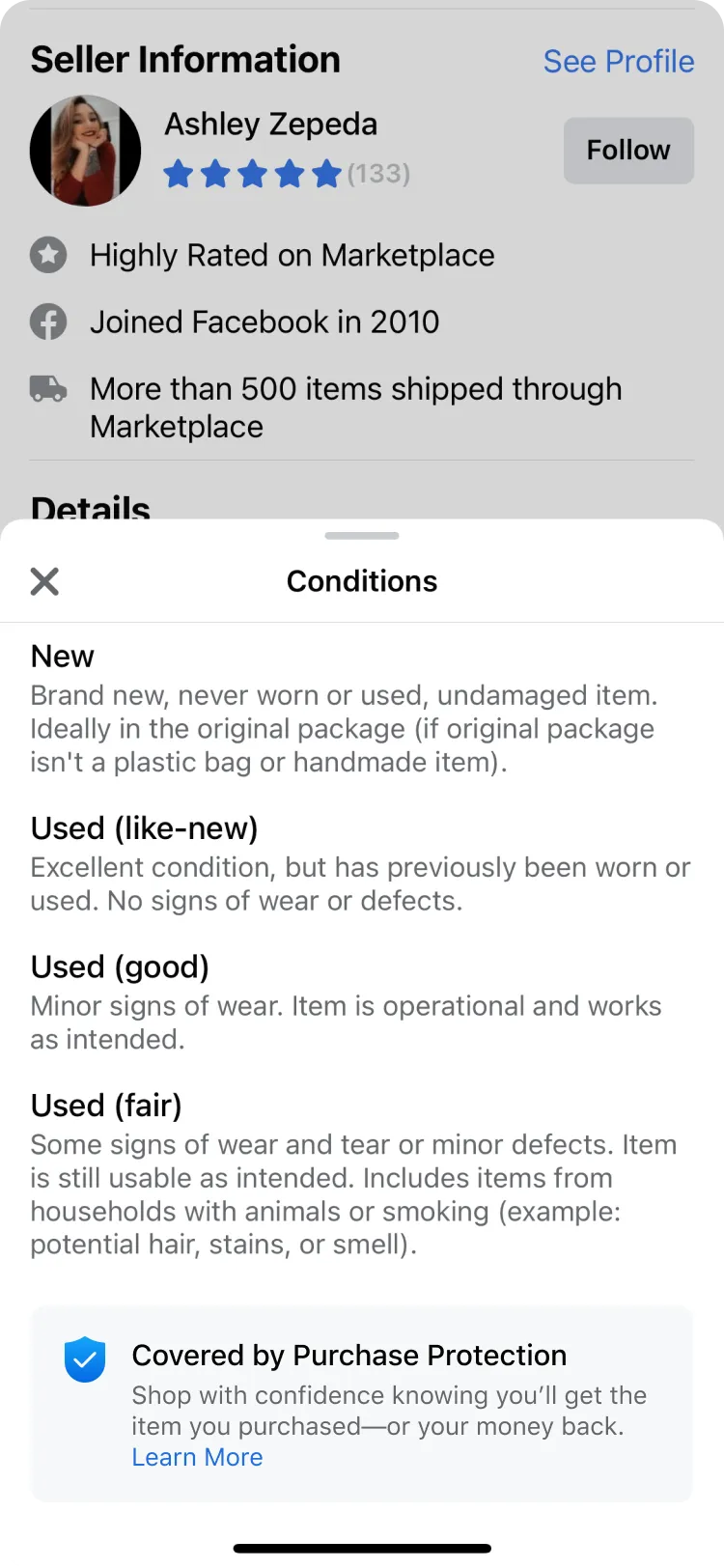
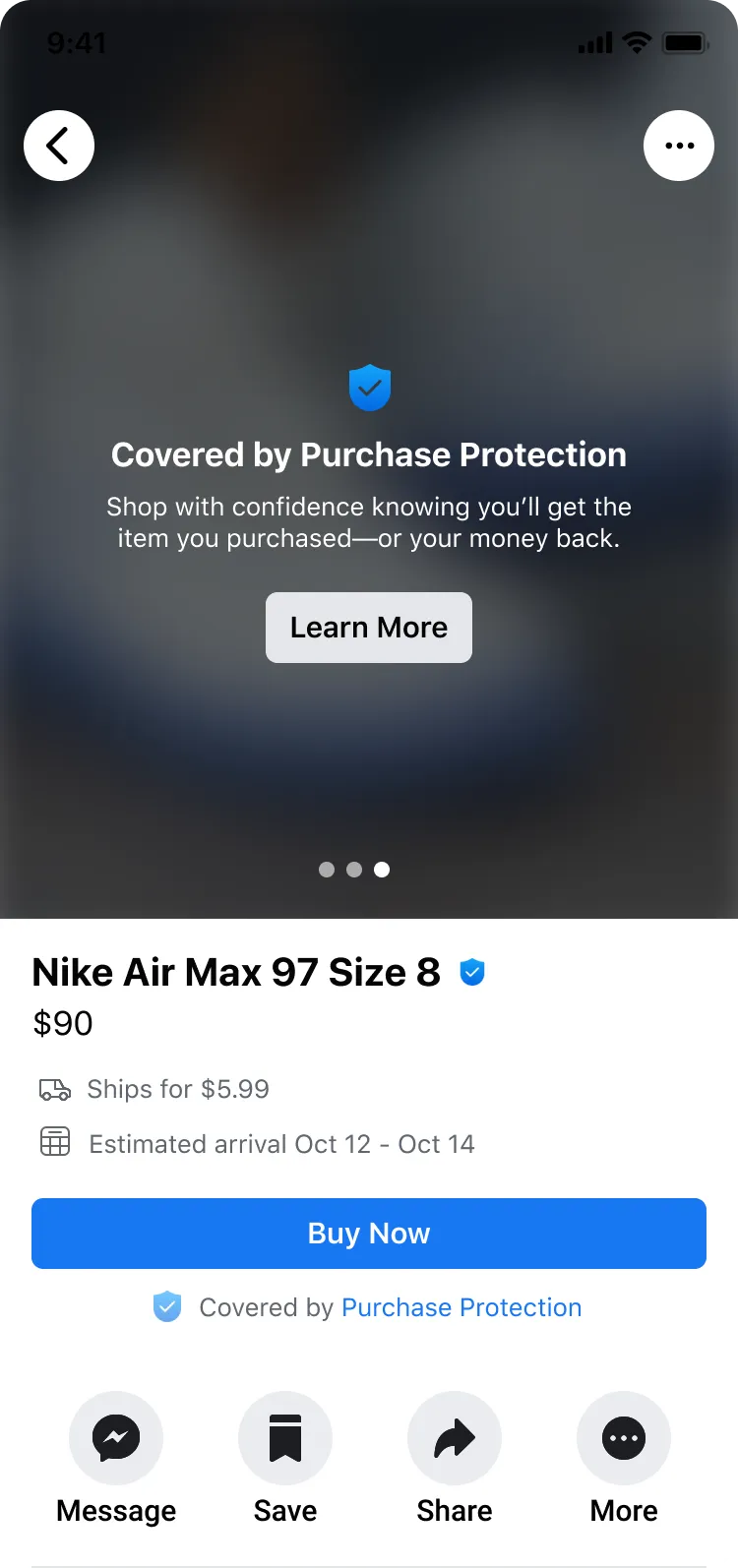
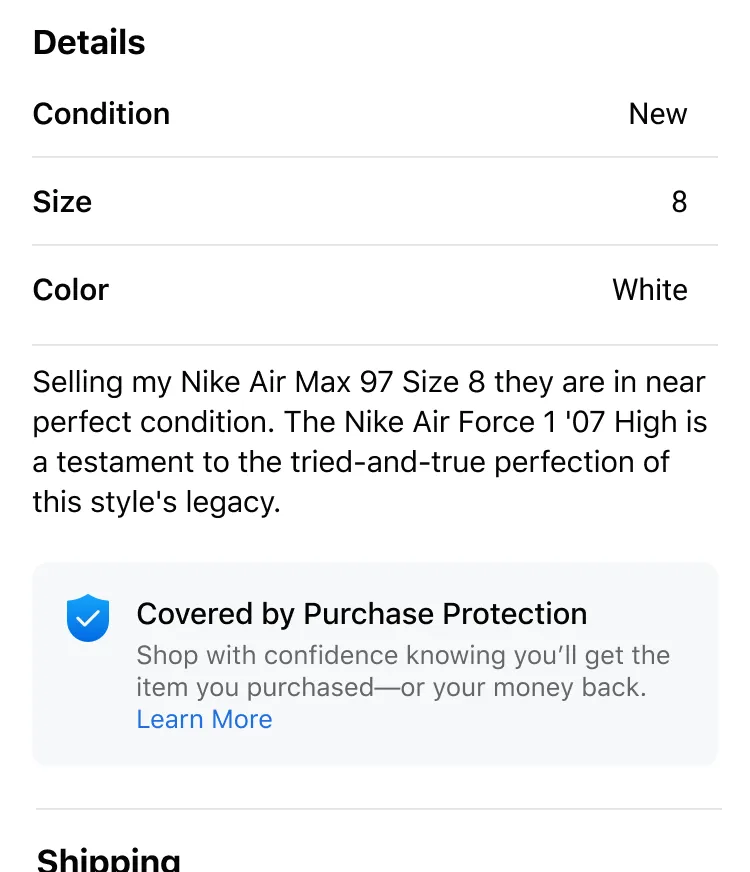
The results — a 3% increase in incremental transactions from the experiment, accounting for 1% of all C2C Shipped transactions for the half.
Adding video to listings
“Buying blind” came up across research as one of the biggest practical barriers to shipping — unlike local sales, there’s no way to inspect an item without engaging the seller. We identified video as potential mitigation. This also built on existing, latent behavior where buyers and sellers would confirm details through video independently.
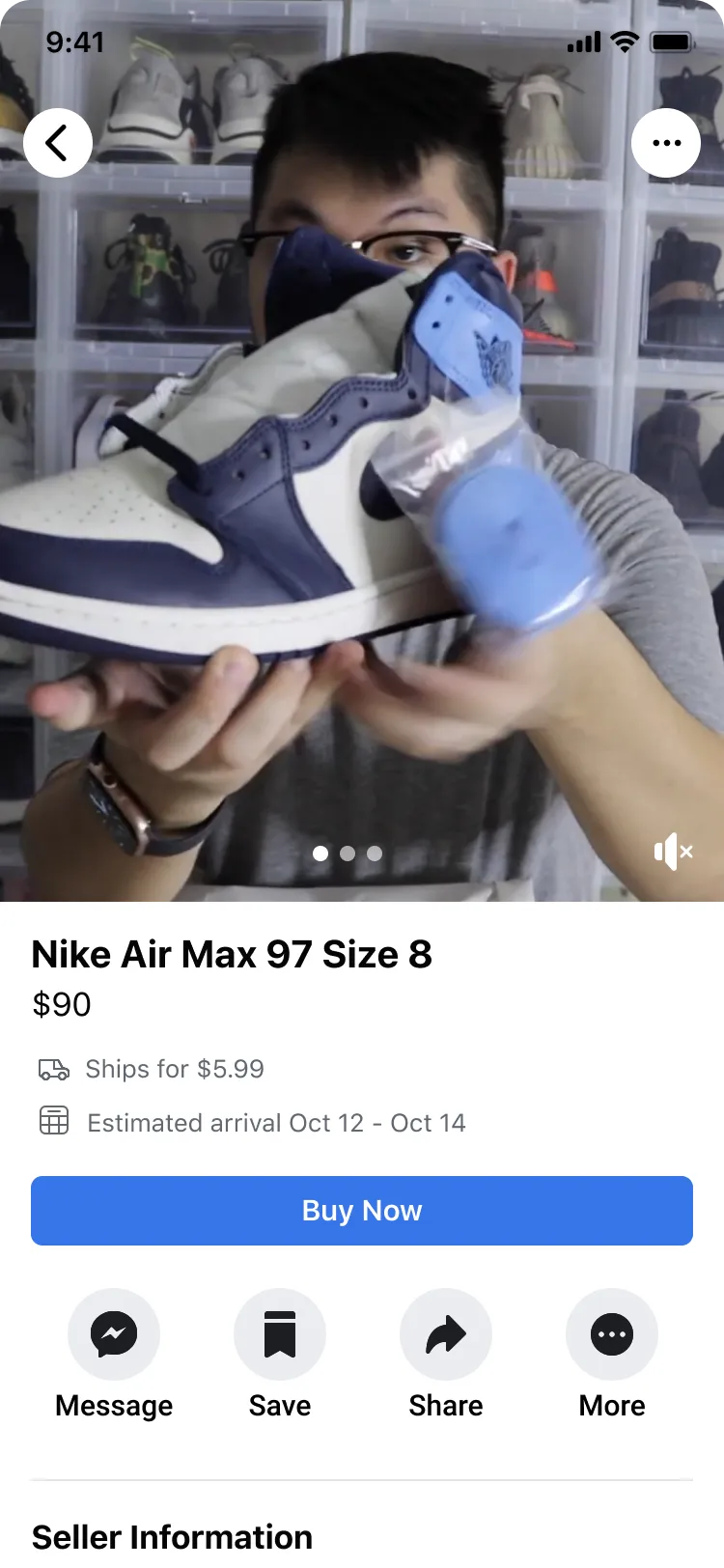
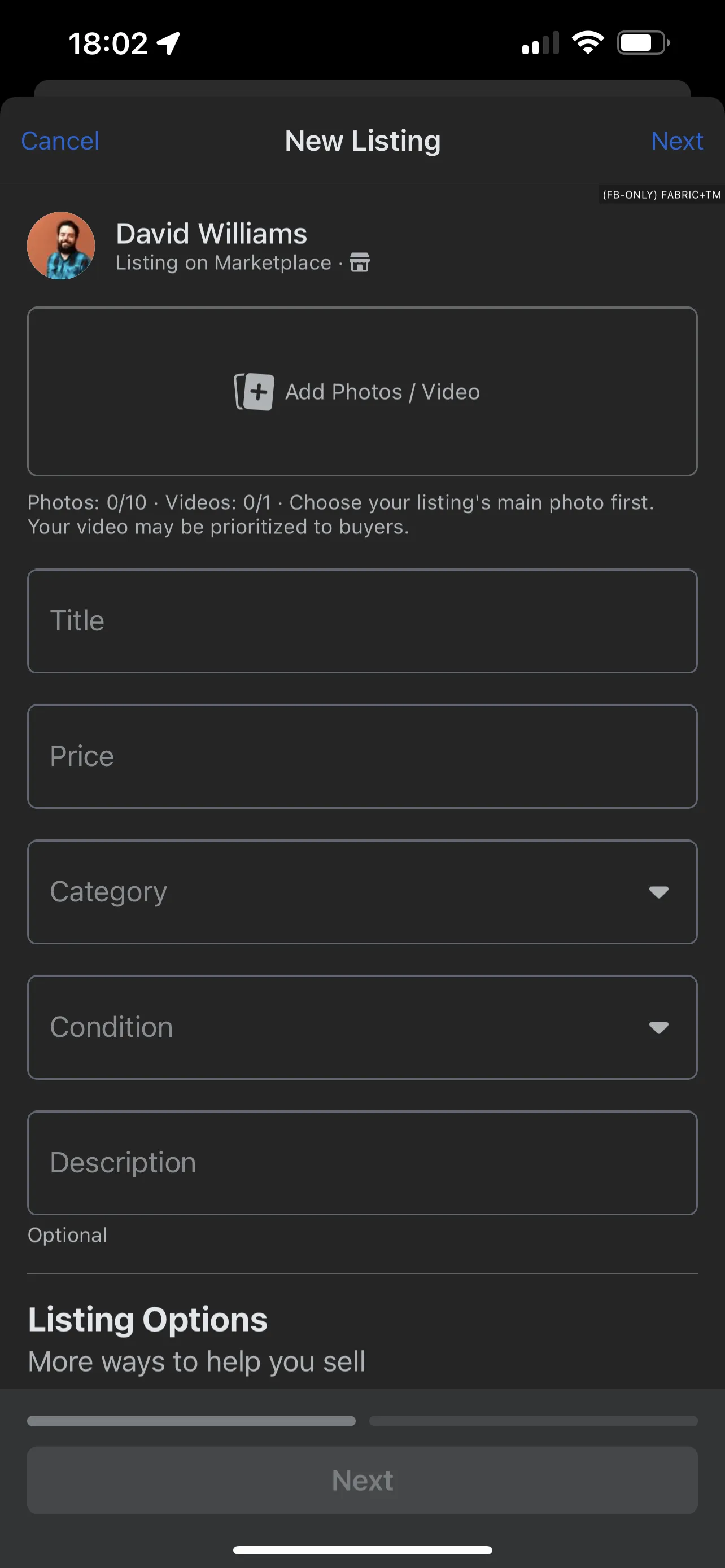
The results — video launched cleanly, with holdout and guardrail metric held through testing.
Impact + results
This work established product-market fit for shipped commerce on Marketplace. More importantly, it showed that trust isn’t a soft metric — investing in it had a direct, measurable effect on transactions.
7% increase in incremental transactions from the shipping-transparency rollup, with individual experiments lifting C2C Shipped transactions 1–3%.
3% increase in incremental transactions from the Purchase Protection experiment — 1% of all C2C Shipped transactions for the half.
A clean video launch — all holdout and guardrail metrics held through stress testing.
The pattern that made it work: research and data pointing at the same barrier, a modular experiment surface cheap enough to test one idea at a time, and XFN partners who owned the case together.
Learnings
The durable lesson is that trust work compounds. None of these workstreams was glamorous — metadata rows, a policy nobody read, a video upload flow — but each one removed a reason to hesitate, and together they changed what buyers believed about the platform. When data and research keep pointing down the same trail, it’s worth following it.
The other lesson is about shared process. So much of this project came together as successfully as it did because our team was comfortable flexing into shared responsibilities across design and strategy — the case-making with data science, the prioritization conversations, the experimentation design. Trust was both the lens and the culture internally, and it’s part of why this product landed where it has today.